
37 lines
3.8 KiB
Markdown
37 lines
3.8 KiB
Markdown
---
|
|
date: "2022-11-06"
|
|
lastmod: "2023-01-02"
|
|
image: "https://bike.shimano.com/content/productsite/en-US/information/news/brake-pad-breakdown-metal-versus-resin-pads--what-you-need-to-kn/_jcr_content/productsite_newsarticle/body_parsys/image_275236632.img.jpg/1585687069390.jpg"
|
|
published: true
|
|
title: How to Choose Mountain Bike Brake Pads
|
|
tags:
|
|
- cycling
|
|
- mountain bikes
|
|
---
|
|
|
|
Whether you think about them all the time or never at all -- mountain bike brakes are what keep you alive on those gnarly descents. And while the whole braking system matters, I'm not going to talk about rotor sizes, 2-piston vs. 4-piston, or lever angle; I'm talking about the humble brake pad.
|
|
|
|
|
|
|
|
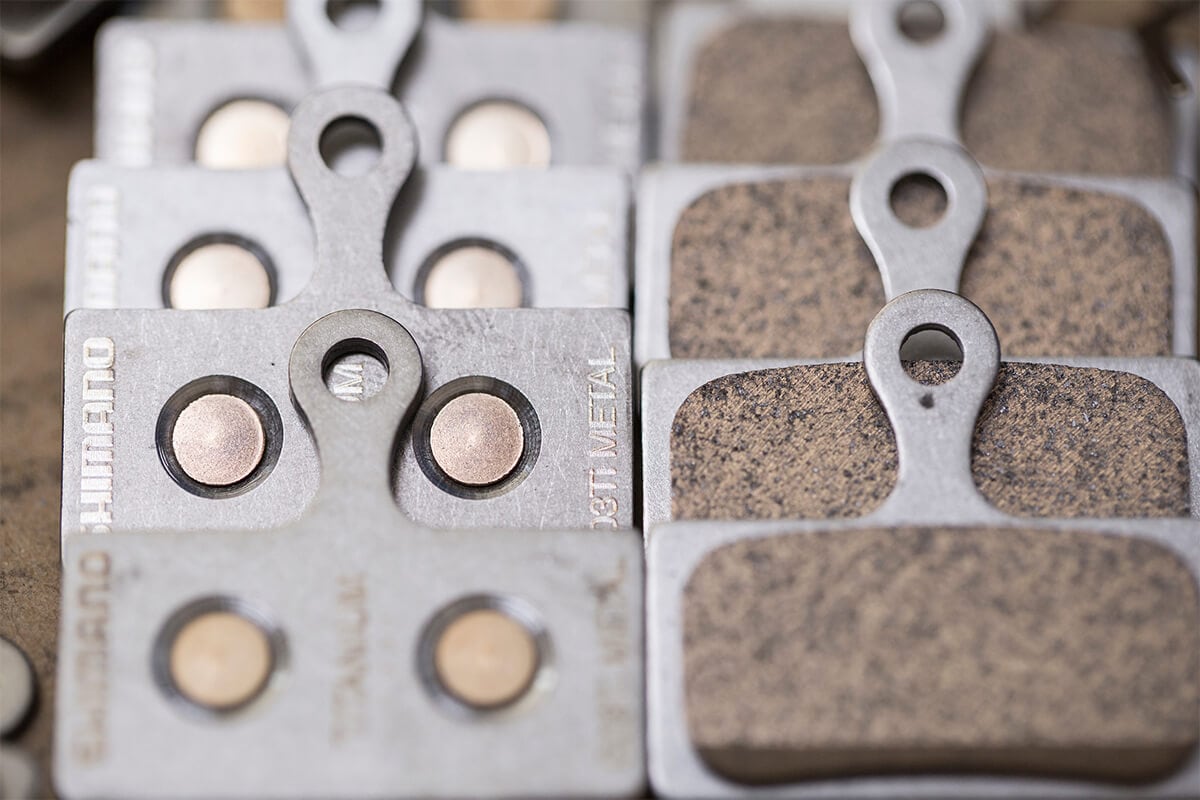
I had long considered brake pad choice a foregone decision -- resin (organic) pads are **king** and metal pads (sintered) are for Huffy! But that's not very well informed. You should choose brake pads based on how you like your brakes to **feel** when you slow down.
|
|
|
|
What actually are the best mountain bike break pads? The classic debate in mountain bike brake systems is Shimano vs. SRAM. It's fundamentally a debate about rider preferences, and how we like our brakes to **feel** when they engage. Many riders describe the difference between Shimano and SRAM brakes as `instant on` vs. `progressive`. Shimano brakes bite on the rotors early on in the lever's stroke, whereas SRAM brakes are well into the lever stroke before they provide significant stopping force. You should give metal (sintered) vs. Resin (organic) brake pads similar consideration.
|
|
|
|
I won't get into the pros and cons of brands because both companies (and their competition) make great products. A rider's brake preference is often defined by whatever brakes came on their first mountain bike. You should give that preference more thought if you haven't already.
|
|
|
|
My first mountain bike came with a pair of Shimano XT brakes, giving me a strong taste for that `instant on` flavor. When I ride SRAM brakes, to me it feels like I'm swimming in an ambiguous sea of lever travel. Whereas many riders love the precise modulation that SRAM brakes afford them. The point here is that nobody is necessarily right or wrong about who makes the best mountain bike brakes, but which brake brand (or lever feel) you prefer should influence which type of brake _pads_ you prefer.
|
|
|
|
After many seasons running resin pads, I recently contaminated a pair with oil while doing a brake bleed and picked up some metal pads out of desperation to replace them. I wasn't expecting much from these ostensibly Huffy-worthy pads -- but they _completely_ surprised me. I love sintered pads now!
|
|
|
|
> Aside: It's typically futile to try decontaminating pads. Perhaps Metal pads don't suffer as badly, but once oil has absorbed into resin pads, it's virtually impossible to remove. Do yourself a favor and buy new pads, and get better at doing brake bleeds!
|
|
|
|
---
|
|
|
|
So what does pad compound choice have to do with brake preference? While there are other factors to consider (like noise) when choosing pads, a simple heuristic for choosing pad compound is to use your brake preference:
|
|
|
|
* Short Stroke / Instant On / Shimano --> **Metal/Sintered**
|
|
* Long Stroke / Progressive / SRAM --> **Resin/Organic**
|
|
|
|
As a proud member of team `instant on`, I'll be riding metal pads for the foreseeable future.
|
|
|
|
For more a more thorough breakdown, check out what [Shimano](https://bike.shimano.com/en-US/information/news/brake-pad-breakdown-metal-versus-resin-pads--what-you-need-to-kn.html) and [SRAM](https://support.sram.com/hc/en-us/articles/5927132559899-What-s-the-difference-between-the-brake-pad-materials-SRAM-offers-) have to say about choosing brake pads.
|